
Scaling · 6 min read
If only the founder can sell it, you don't have a brand yet.
Early growth runs on the founder's energy, voice and judgement. It works until the company needs to grow faster than one person can be in the room.
 Mike Bruce · Brand Growth Architect
9 October 2026
Most growing companies are sold by their founder. The founder's relationships open the doors, the founder's pitch closes the deals, and the founder's instinct sets the standard for every customer interaction. In the early years that is a strength. It is also the ceiling.
The moment the company needs a sales team, a second location or a new market, the story starts to fragment. Each new hire explains the business slightly differently. Quality drifts when the founder steps back. Growth begins to depend on how many meetings one person can take.
It looks like an operations problem. It starts as a brand problem.
Founder dependency is usually diagnosed as an operations issue: not enough process, not enough delegation. Those are symptoms. The cause is that the brand only exists in one person's head.
A brand is not what you make. It is what your market can repeat without you in the room, and the first people who need to be able to repeat it are your own team. If they cannot say what the company is, who it is for and why it wins in the same words, no process will hold.
The first people who need to repeat your brand are your own team.
Codify the founder
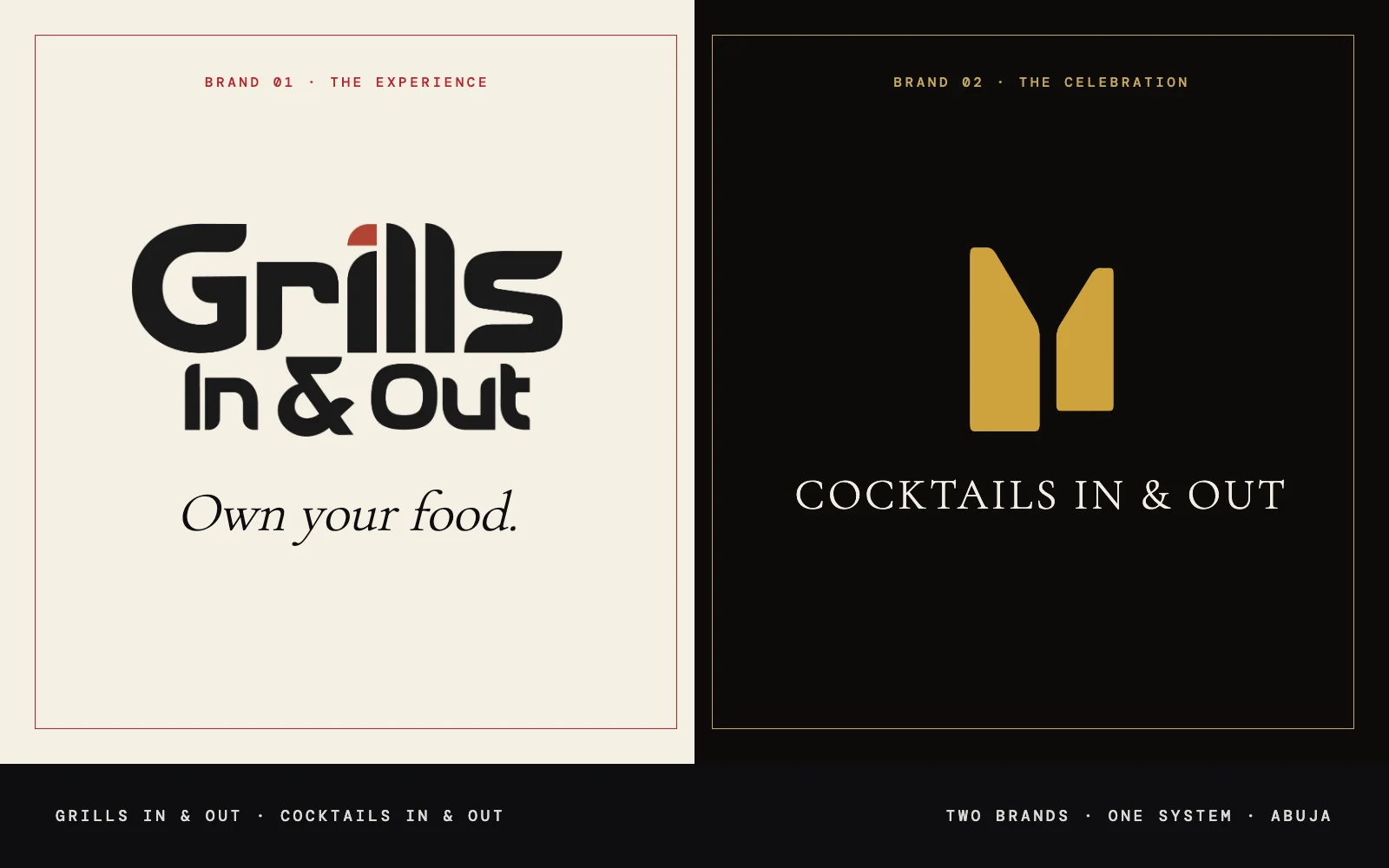
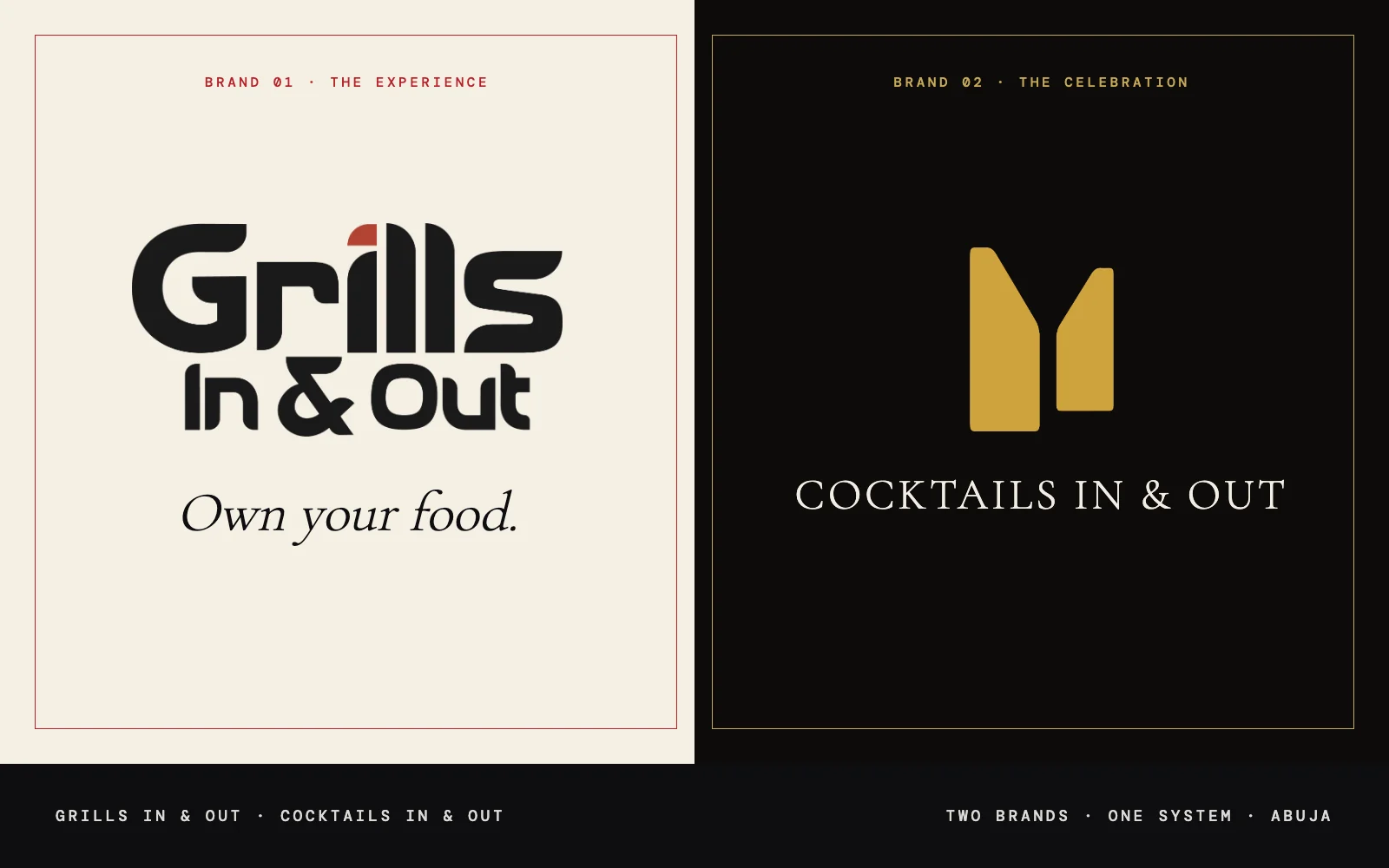
The fix is codification: turning what the founder knows, believes and insists on into documented systems that can be trained, measured and maintained. In our work with Grills In & Out and Cocktails In & Out, that meant five documents.
- A brand standards manual: exactly what makes the brand different, in writing.
- A customer experience playbook: standards for every touchpoint, from order to delivery to after-care.
- A staff training framework: onboarding that carries the brand's values into every new hire from day one.
- A quality control checklist: the non-negotiables, so standards do not depend on who is on shift.
- A content execution guide: so the founder is not the only person who can run the brand's channels.
Codifying is not replacing
Founders worry that writing it all down will flatten what made the business special. In practice the opposite happens. The founder's thinking stops being lost every time someone leaves, and it starts being applied in rooms the founder will never enter.
The position comes first. Grills In & Out already had a remarkable line, Own Your Food, and the work turned it into a category position: participatory dining, where the customer co-creates the meal. Every standard, script and template then had one idea to serve. Following the relaunch, the brands recorded 150% revenue growth with a sustained 5-star customer experience rating.
Where to start
Ask five people on your team to describe the company in one sentence, separately. If the answers differ, start there. Our page on scaling founders sets out the rest of the system.