Industry take · 4 min read
Docker's name says containers. Its new brand says trust.
On 19 November 2026 Docker unveiled a new brand identity, with a redesigned Moby the whale, and said the new Docker is all about trust as AI agents arrive. The founder's lesson: sell the outcome people buy from you, not the tool you deliver it with.
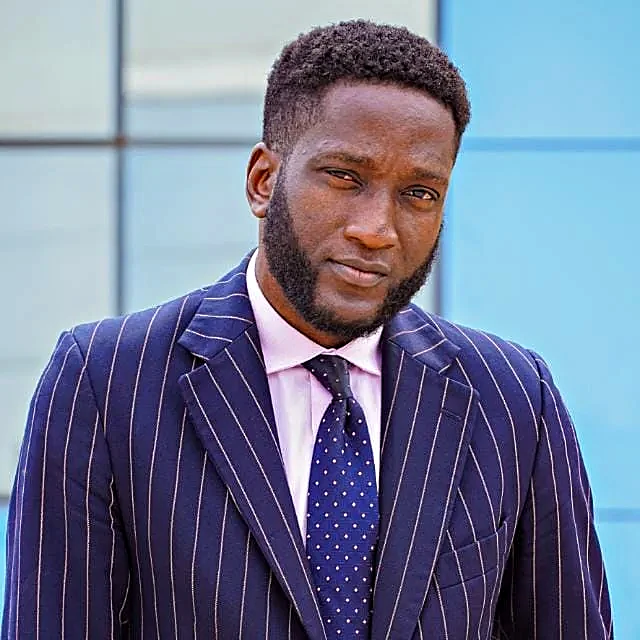 Mike Bruce · Brand Growth Architect
20 November 2026
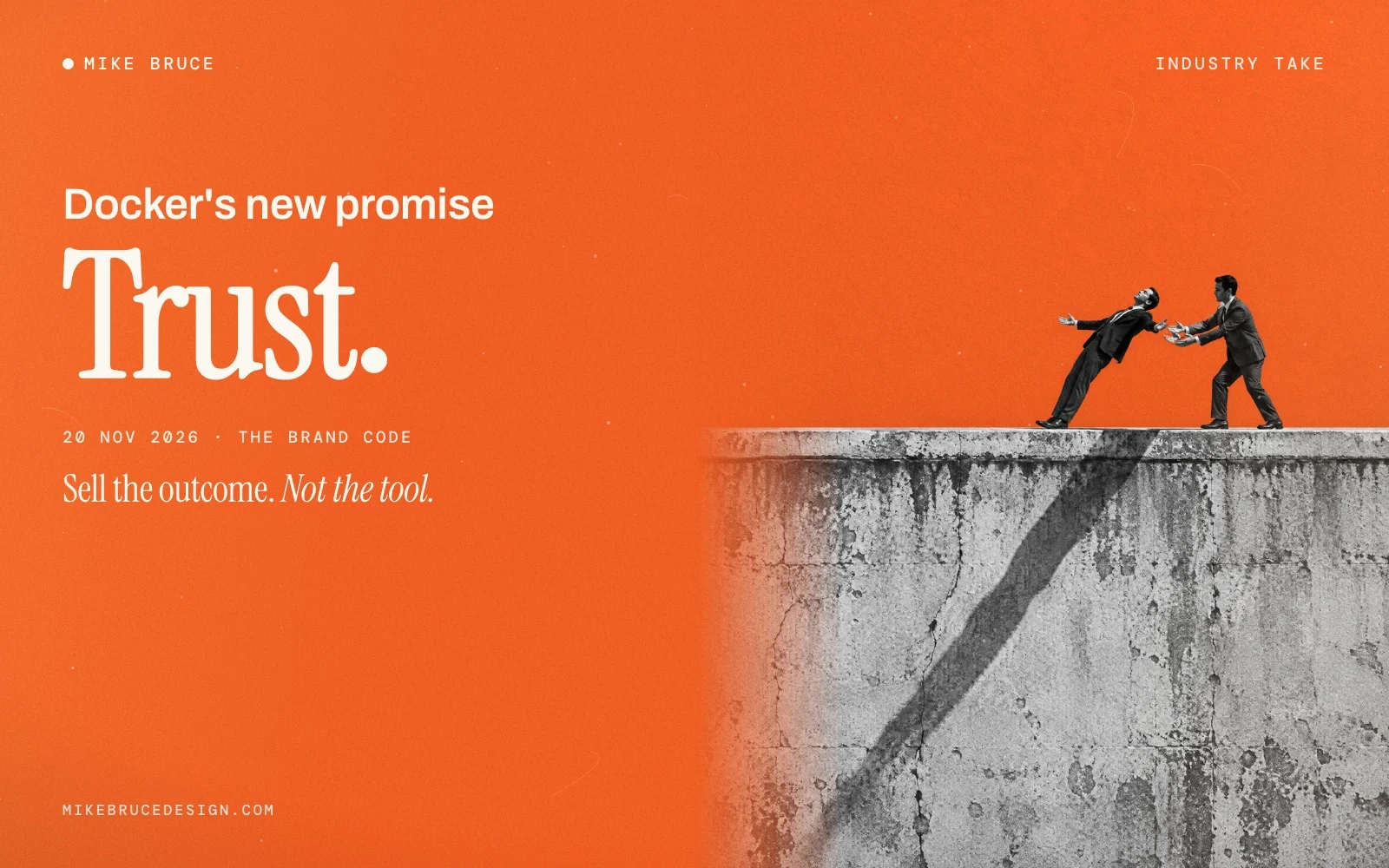
On 19 November 2026, Docker unveiled a new brand identity. The whale is still there, redrawn. The bigger change is the promise. A company whose name means containers now says the new Docker is all about trust. If your business is named after the thing you make, this one is for you.
What happened?
Docker's Chief Marketing Officer, Terri Avnaim, announced the change in a post on Docker's blog. It introduces a redesigned Moby, the whale mascot, and a new website. It credits the brand transformation company Motto for helping with the work.
The reason given is AI agents. Docker's argument is short: containers isolate workloads, but agents are not workloads. They act and decide for themselves. So the question for a business becomes how to trust them without giving up security or control. Docker says its next chapter is security, isolation and governance for agents, and points to two products, Docker Sandboxes and Docker AI Governance.
The post is careful about what stays. Docker says it is still developer-first, still open, and that the containers people know are not going anywhere. It says the change is not about leaving its heritage behind.
What are people saying?
Linuxiac reported it on 20 November as a move to become a platform for running and managing AI agents safely, while keeping containers. The one reader comment under that report, when I read it, did not like the new logo.
The fullest account of the design is from Mohammad-Ali A'râbi, a Docker Captain writing on his own independent site. He lists a simpler whale, a new blue, a new typeface, and a core message of "Run on Trust" in place of "Build, Ship, Run". Docker's own post does not list the colours or the typeface, and it uses "build, ship, and run" only when telling its history. So those design details are his account, not Docker's. He likes the new look. Nobody knows yet whether the wider market will follow Docker into agents.
My take: sell the trust, not the container
This is opinion. Docker has a problem many founders have. Its name is its product. For more than a decade that was a gift. Now the market is moving, and a name that says "containers" could have become a ceiling.
Look at what Docker did not do. It did not change the name. It did not drop the whale. It asked a harder question: what were people really buying from us all those years? The answer was never a container. It was certainty. The thing I built will run the same way everywhere. Docker has now put that outcome at the front and moved the tool behind it.
The tool is how you deliver. The outcome is why they pay. Build the brand on the outcome.
I say often that certainty is the brand. This is that idea at full size. A brand built on a tool gets old when the tool does. A brand built on an outcome can carry new products for decades.
In Brand Growth OS™ terms, this is Clarify before Construct. The sentence changed first. The whale and the colours followed. One caution, though. "Trust" is a word any company can print. It becomes Docker's only if the agent products earn it in use. I made the same point when Kasuku launched a new promise: the line is a promise, and proof is what you do.
What should a founder do about it?
- Ask what people really buy from you. Not the website, the audit or the cake. The result. Sleep at night. A full room. A yes from the board. Ask five customers and write down their words.
- Check where your brand points. Read your homepage and your bio. If they describe the tool and not the outcome, a new tool can make you look out of date.
- Keep what people recognise. Docker kept its name and its whale and moved the meaning. You can change the promise without throwing away the things customers know you by.
You do not need an AI strategy to use this. You need one clear sentence about the outcome you sell. The free differentiation audit helps you find it. The Brand Growth Audit™ shows where your message still sells the tool, and the Brand Growth OS shows the order to fix it in. See all brand voices or read about Mike Bruce.
Sources
Docker, Terri Avnaim (19 Nov 2026) · Linuxiac, Bobby Borisov (20 Nov 2026) · containersecurity.dev, Mohammad-Ali A'râbi (19 Nov 2026). Opinion is Mike Bruce's; facts are as reported by those sources. Mike Bruce Design has no connection with Docker or Motto. See all brand voices.
About the author
Work with Mike Bruce.
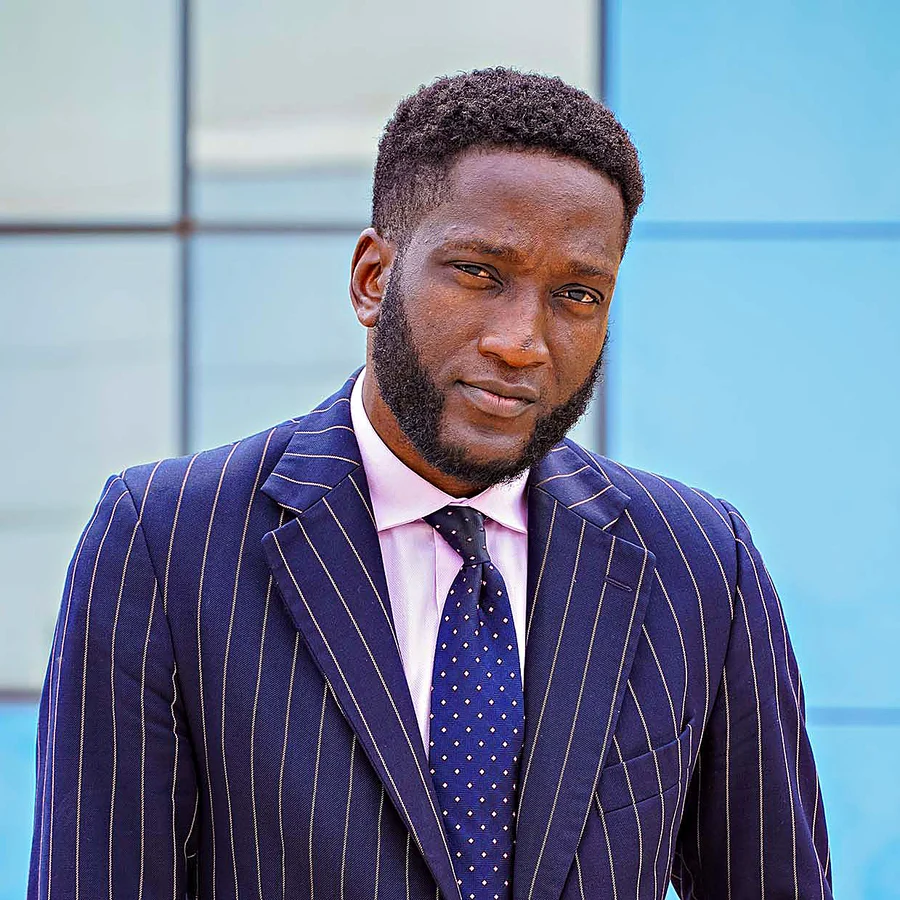
Mike Bruce is a brand consultant and brand strategist in Abuja, Nigeria, and the founder of Mike Bruce Design. He helps growing companies in Nigeria, the UK and the US get clear on who they are for, price for the value they create, and get chosen.