Voices · 5 min read
Seth Godin and the case for a smaller audience.
Seth Godin is an American author and entrepreneur who wrote Permission Marketing in 1999 and This Is Marketing in 2018. His idea of the smallest viable audience is the opposite of chasing everyone. Here is what it says and how a founder can use it.
 Mike Bruce · Brand Growth Architect
23 October 2026
Seth Godin is an American author, marketer and entrepreneur. According to Wikipedia, he studied computer science and philosophy at Tufts and took an MBA at Stanford. He co-founded Yoyodyne, a permission marketing company that Yahoo acquired in 1998, then launched Squidoo in 2006 and the altMBA workshop in 2015. His books include Permission Marketing (1999), Purple Cow (2003), Tribes (2008) and This Is Marketing (2018). He was inducted into the American Marketing Association's Marketing Hall of Fame in 2018.
What is the smallest viable audience?
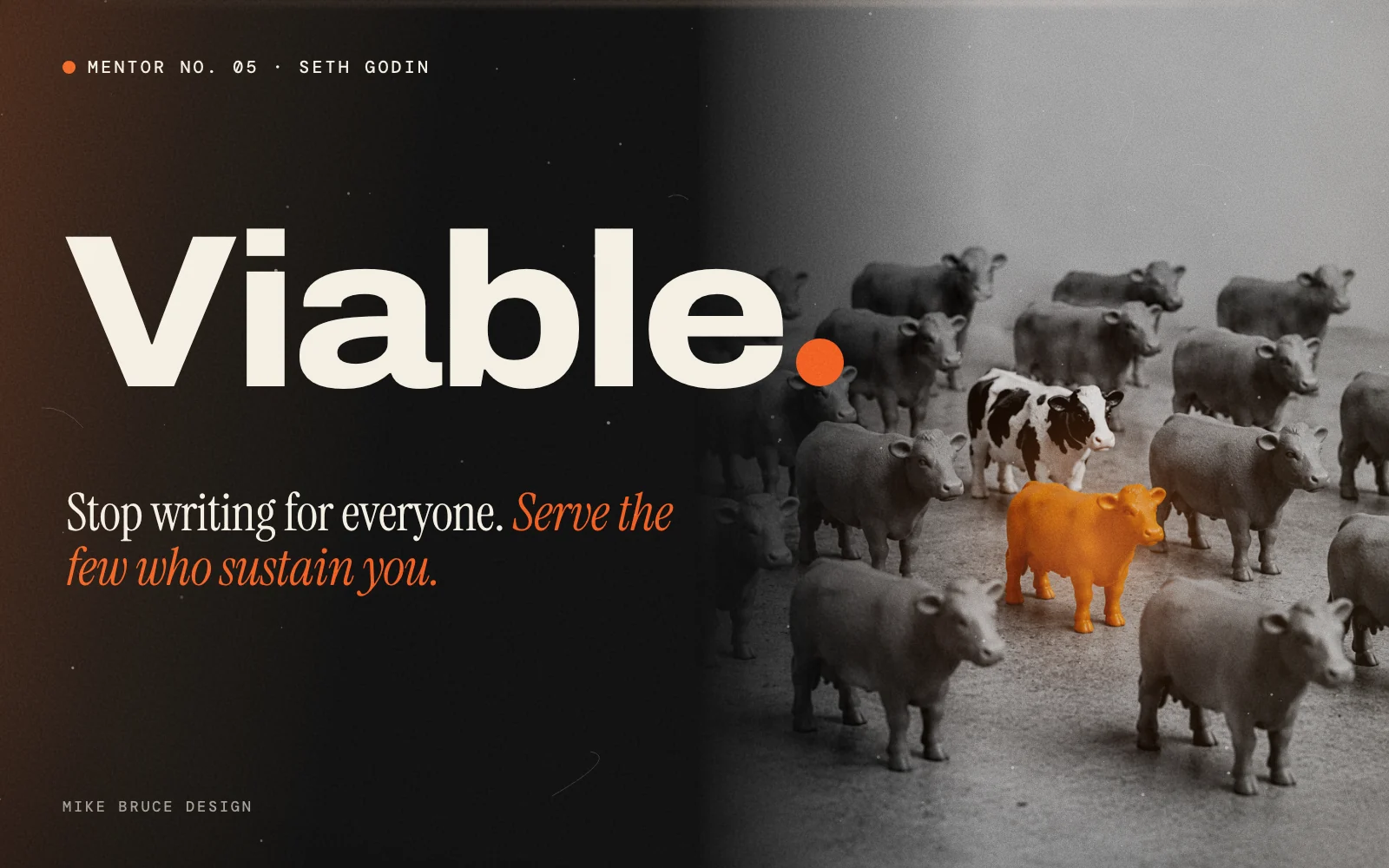
It is the central idea of This Is Marketing. The publisher's description says the book teaches readers to identify their smallest viable audience, position their offer with the right signals, and build trust and permission with it. In plain terms: stop trying to reach everyone. Find the smallest group that shares a real need and can sustain your work, and serve them well.
Permission, the idea behind his 1999 book, is the other half. You earn the right to talk to people instead of interrupting them. I have not found a quotable definition from Godin himself in the sources I checked, so I am describing it only in general terms.
My take
This is opinion. Founders hear "niche down" and feel they are leaving money behind. The smallest viable audience answers that fear with arithmetic. If the small group is big enough to keep you going, everyone else is optional.
I see the cost of ignoring it every week. A founder writes one message for four different buyers and none of them hears it. The result is a brand that is polite to everyone and memorable to nobody.
In the Brand Growth OS™ this is the heart of Clarify. Decide who the brand is for, and just as importantly, who it is not for. It also supports my 95-5 view: most buyers are not in the market today, so the job is to be the obvious choice for a small group when they are.
Three questions to find yours
- Who needs this most? Name them in specific terms: role, situation, the problem that wakes them at night.
- Could they sustain you? Count them. If serving only that group pays the bills, you have your audience.
- What would you stop saying? List the messages written for everyone else. Cut one this week.
The Niche Scorecard helps you test the second question, and the 95-5 Content Plan shows how to stay visible to the people who are not buying yet.
Sources
Wikipedia: Seth Godin · Penguin: This Is Marketing · Shortform summary. See all brand voices · About Mike Bruce.
Keep reading