Industry take · 5 min read
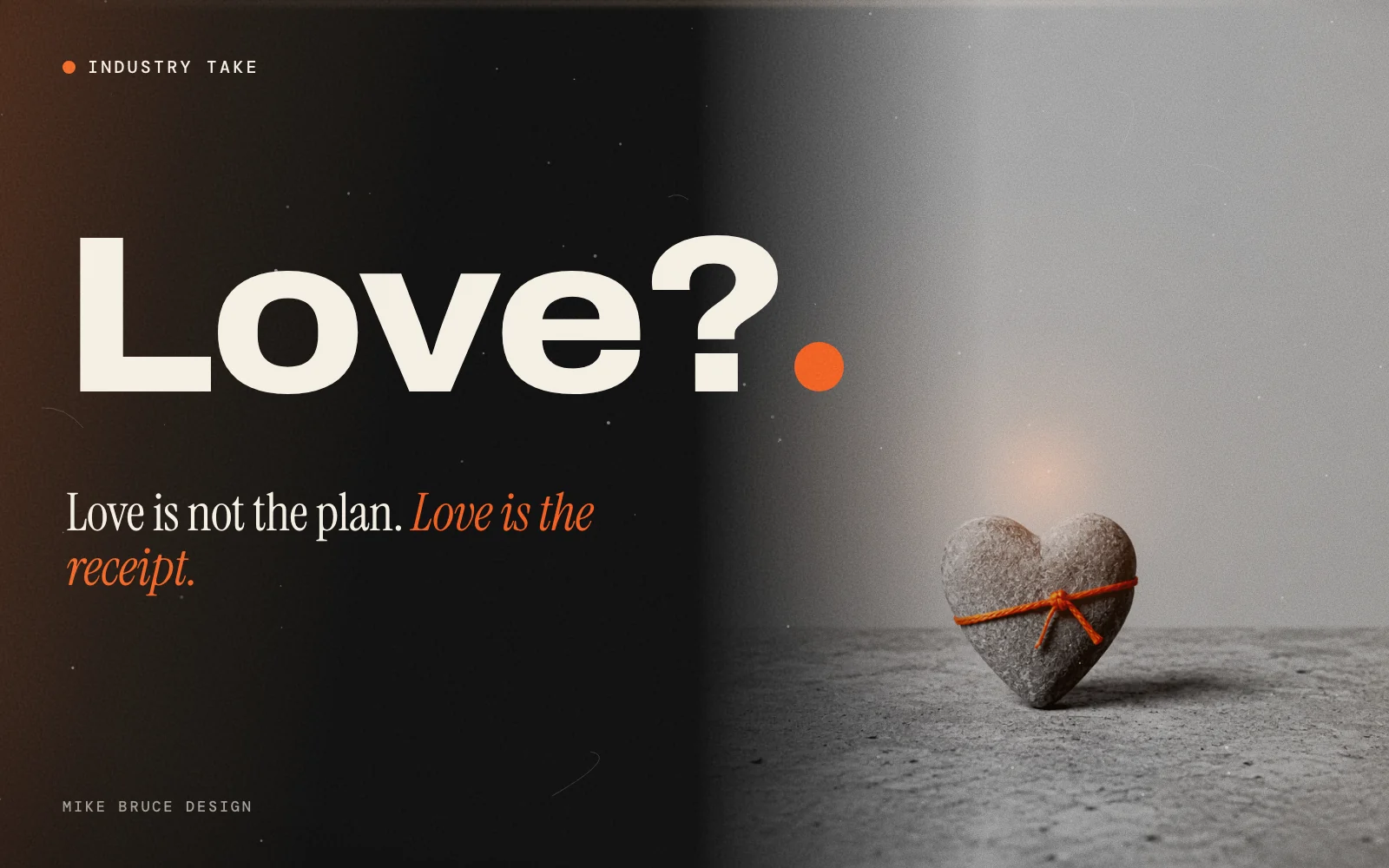
Brand love is not the plan. It is the receipt.
This week Marketing Week asked whether brands should still chase love, after Coca-Cola's global CMO said he no longer believes in it as a tactic. My view: love is what behaviour earns, so measure what people do first and ask why second.
 Mike Bruce · Brand Growth Architect
24 October 2026
On 22 October 2026 Marketing Week asked a question many marketers now argue about: do you believe in brand love? The piece, by Matthew Valentine, follows Coca-Cola global chief marketing officer Manolo Arroyo saying he no longer believes in love as a viable marketing tactic. Carlsberg Group CMO Yves Briantais is reported defending it as a route to mental availability. The article is behind a paywall, so I have only read its opening.
Why did Coca-Cola's CMO drop brand love?
A write-up of his talk at the ANA Masters of Marketing conference says brand love was the company's main metric for twenty years, a perception score, and that it sometimes rose while business performance fell. The write-up says Coca-Cola switched to a behavioural measure, total consumer base, and that Arroyo says brand love can still rise, but it follows behaviour. That is a secondary source, so treat the detail as his account as reported, not as audited fact. I covered the other half of this story in my take on Coca-Cola's brand pruning.
My take
This is opinion. Both camps are partly right, and they are arguing about the wrong thing.
Love is not a tactic you can run. You cannot schedule it, buy it or brief it. It is what people feel after a brand has been clear, consistent and useful again and again. In the Brand Growth OS™ it is an outcome of the loop: Clarify what you stand for, Construct it so it can be recognised, Connect it everywhere, Convert attention into action. Love comes after. It is the receipt, not the plan.
That makes Arroyo's instinct sound to me. If a score goes up while sales go down, the score is not driving anything. But I would not throw it away. A behaviour number tells you what people did. It cannot tell you why, and without the why you cannot repeat it. Certainty is the brand, and people are certain about you for a reason you can name.
Measure the behaviour. Ask about the feeling. Never confuse the two.
What should a founder do about it?
- Pick one behaviour that proves the brand is working. Enquiries from people who named you, repeat orders, referrals. One number, tracked monthly.
- Add one question that explains it. Ask new customers why they chose you over the alternative, in their own words. Write the answers down.
- Stop chasing the feeling directly. If your offer is unclear or your message changes every month, no amount of warmth will fix it. Fix clarity first. The Brand Growth Audit™ shows where it is leaking.
Sources
Marketing Week, 22 October 2026 (opening only; paywalled). Marketers and Money, 21 October 2026 (secondary account of the ANA talk). Opinion in this piece is Mike Bruce's. See all brand voices · About Mike Bruce.
Keep reading