Voices · 6 min read
David Aaker taught brand people to count what a brand is worth.
David Aaker is Vice Chairman of Prophet and professor emeritus at UC Berkeley's Haas School of Business, and is often called the father of modern branding. His brand equity model and brand identity model are still the working tools of brand strategy. Here is what they say, in plain English, and how a founder can use them.
 Mike Bruce · Brand Growth Architect
23 October 2026
When a brand strategist says "equity", they are usually standing on David Aaker's work. Aaker is Vice Chairman of the consultancy Prophet and professor emeritus of marketing strategy at UC Berkeley's Haas School of Business. He studied management at MIT and took his PhD at Stanford, and Prophet describes him as "the father of modern branding". Wikipedia lists more than a dozen books, from Managing Brand Equity in 1991 to a second edition of Aaker on Branding.
What is the Aaker brand equity model?
The idea in Managing Brand Equity is simple. A brand's name, symbols and reputation are assets. They add value beyond the product itself, and they take years to build. Prophet says the model shifted marketers' attention from short-term sales numbers to the long-term strength of the brand.
Sources summarise the assets a little differently. Wikipedia lists three: awareness, loyalty and associations. Publisher descriptions of the book give five, adding perceived quality and proprietary assets such as trademarks and channel relationships. Both versions say the same thing. A brand is worth something because people know it, trust it, connect it with something and keep coming back.
What is the Aaker brand identity model?
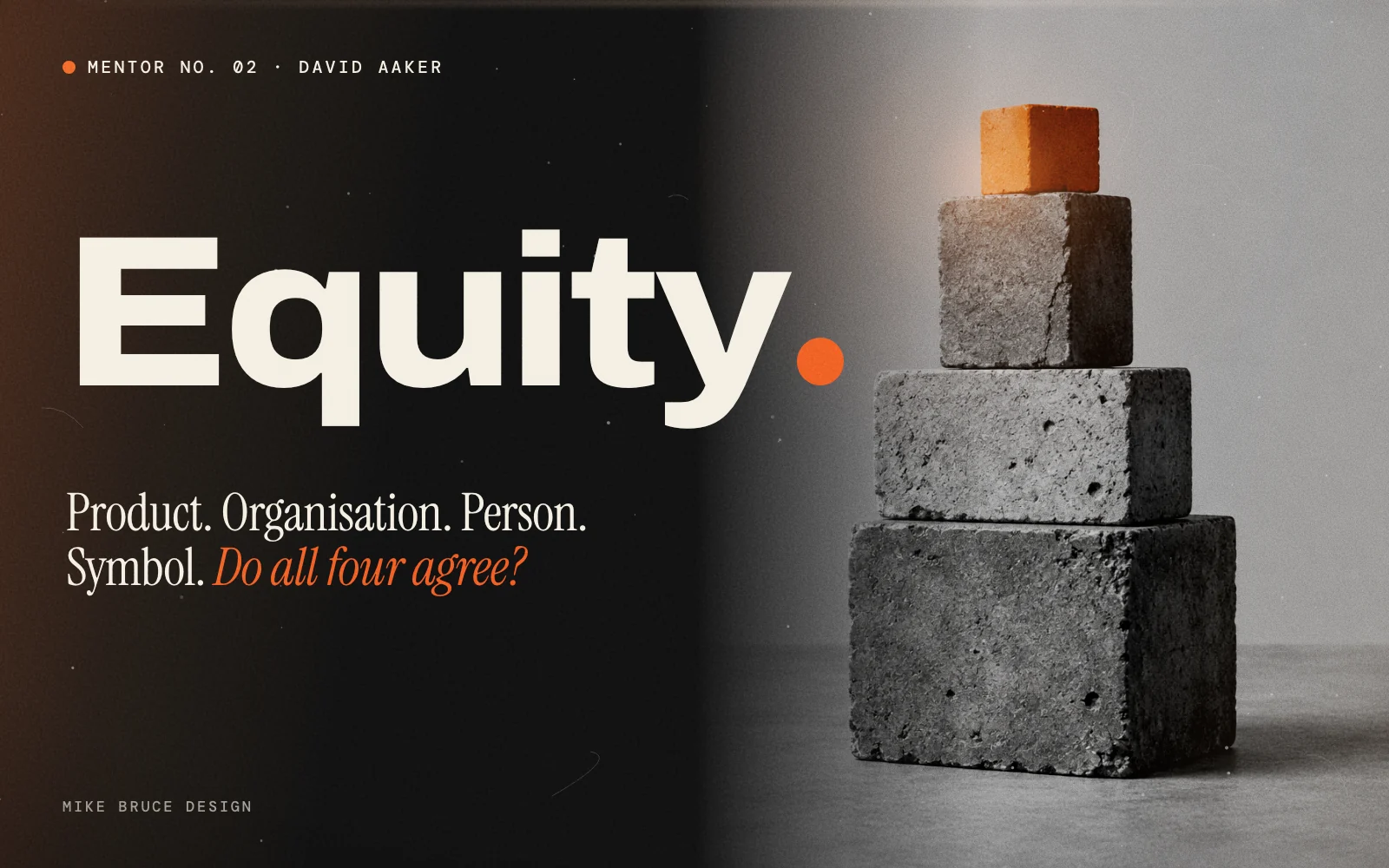
In Building Strong Brands, Aaker set out how a company should define what its brand stands for. Per Wikipedia, an identity has 8 to 12 elements grouped under four perspectives:
- Brand as product: what it does, its quality and its uses.
- Brand as organisation: the values, people and culture behind it.
- Brand as person: its personality, as if it were someone you could describe.
- Brand as symbol: the visual and verbal marks that stand for it.
Prophet now calls it the Brand Vision Model, or the Aaker Model.
The other ideas worth knowing
Brand Portfolio Strategy (2004) deals with how a company with several brands decides what each one is for. Brand Relevance (2010) and Creating Signature Stories (2018) cover staying relevant as a market shifts and using stories to carry a brand. I am not summarising those two in detail here, because I would rather read the books than guess.
My take
This is opinion. Aaker's best gift to a founder is the four perspectives, because most weak brands are strong in one and silent in the others. A company is proud of its product, never says what it believes, has no personality in writing, and uses a logo that nobody has connected to any of it.
In my work that is the Clarify and Construct problem. The four perspectives make a quick test for it, and they connect to what I wrote in architecture before expansion: a portfolio of brands only works when each one has a clear job.
Try it on your own brand
- Write four sentences: one each for product, organisation, person and symbol. Keep each to one line.
- Read them aloud together. If they do not sound like one company, you have found your first fix.
- Pick one equity asset to build this year: awareness (more people know you), associations (they link you with something specific), perceived quality or loyalty.
The Positioning Statement Builder helps with the first step, and the Brand Growth Audit™ scores where your brand is thin. See how the work fits together in the Brand Growth OS™.
Sources
Wikipedia: David Aaker · Prophet: Aaker on Brands · UC Berkeley Haas faculty page. Where these differ (publication years and the number of books vary between sources), I have kept to what they agree on. See all brand voices · About Mike Bruce.
Keep reading