Studie · 5 Min. Lesezeit
Website-Redesigns: Was 200+ Webteams GoodFirms berichtet haben und was wir ergänzen würden.
GoodFirms has published Website Redesign Statistics 2027, built on more than 200 survey responses from people who design and build websites. Mike Bruce Design took part and is credited as an Official Research Partner. Here are the numbers worth knowing, and what we would add from our own projects.
 Mike Bruce · Brand Growth Architect
20 November 2026
GoodFirms has published Website Redesign Statistics 2027, a study built on more than 200 survey responses from people who design and build websites, collected in October 2026. Mike Bruce Design took part, and we are credited as an Official Research Partner alongside 98 other firms.

The numbers worth knowing
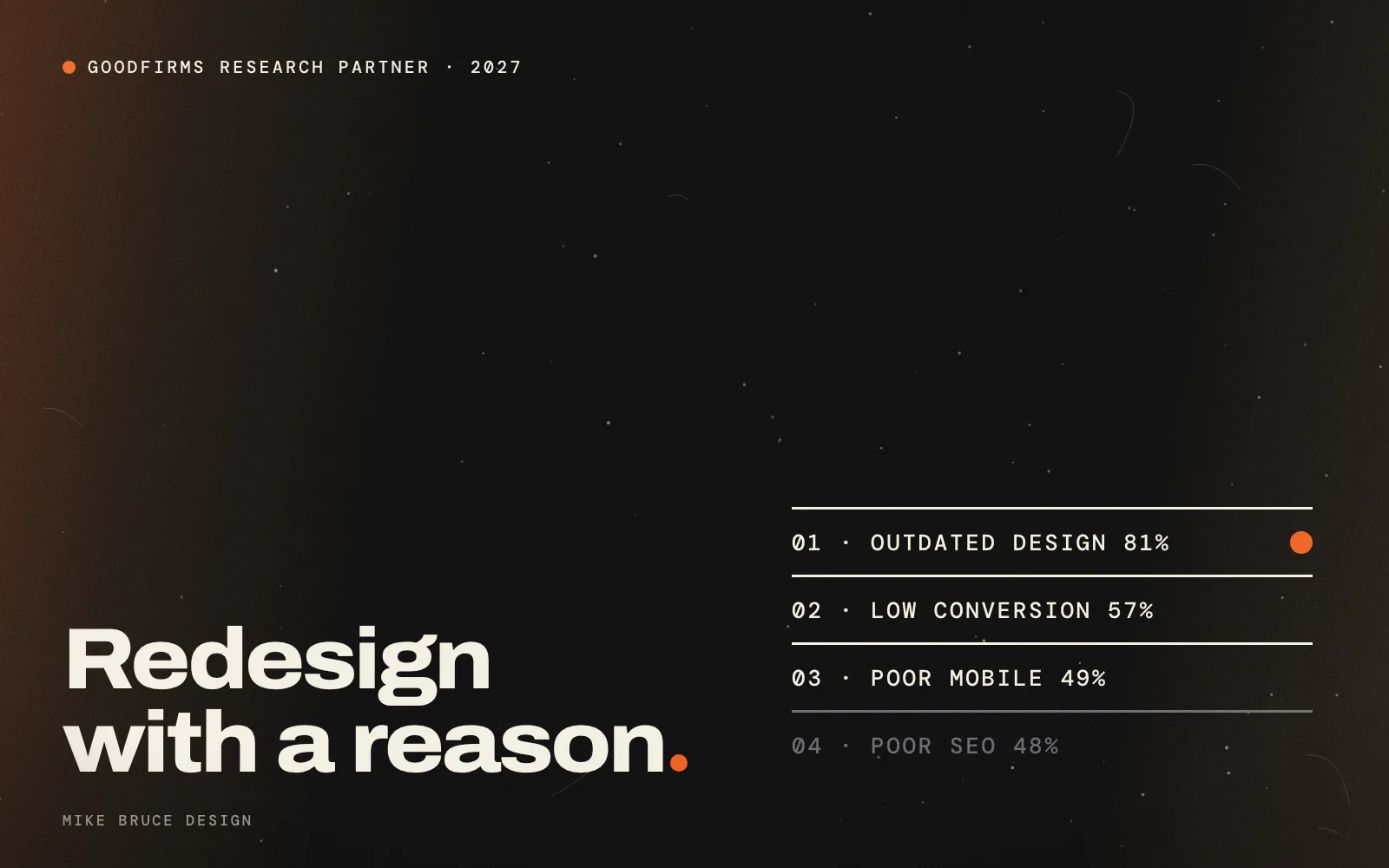
- Why companies redesign. An outdated design was the most cited reason (81%), followed by low conversion rates (57%), poor mobile experience (49%) and poor SEO performance (48%).
- What they want from it. A better user experience (64%), more enquiries or leads (54%) and higher conversion rates (53%).
- What it costs. 66% of respondents said their redesign projects cost less than $10,000. The number of pages or templates was the most cited cost factor (75%).
- How long it takes. One to two months was the most common timeline (40%). Design approvals were the most cited cause of delay, ahead of content.
- What AI changed. Research and discovery is the most common use of AI in a redesign (82%). Most respondents said AI makes projects faster, but only 14% said they had lowered their prices.
The gap between the two lists
Read the reasons and the outcomes side by side. The most common reason to start a redesign is how the site looks. The outcomes people want are about what the site does: a smoother journey, more enquiries, better conversion.
A new look can be approved in one meeting. Whether it produces enquiries is decided by the position behind it and the route a buyer takes through it. The report makes the same point: before deciding what the new website should look like, agree what it needs to do better.
People notice an old design. Buyers act on a clear next step.
That is how we work. In the Brand Growth OS™ the website is the Connect phase, and it comes after Clarify: who the company is for, why it wins, and what the buyer should do next.
What that looked like in two of our projects
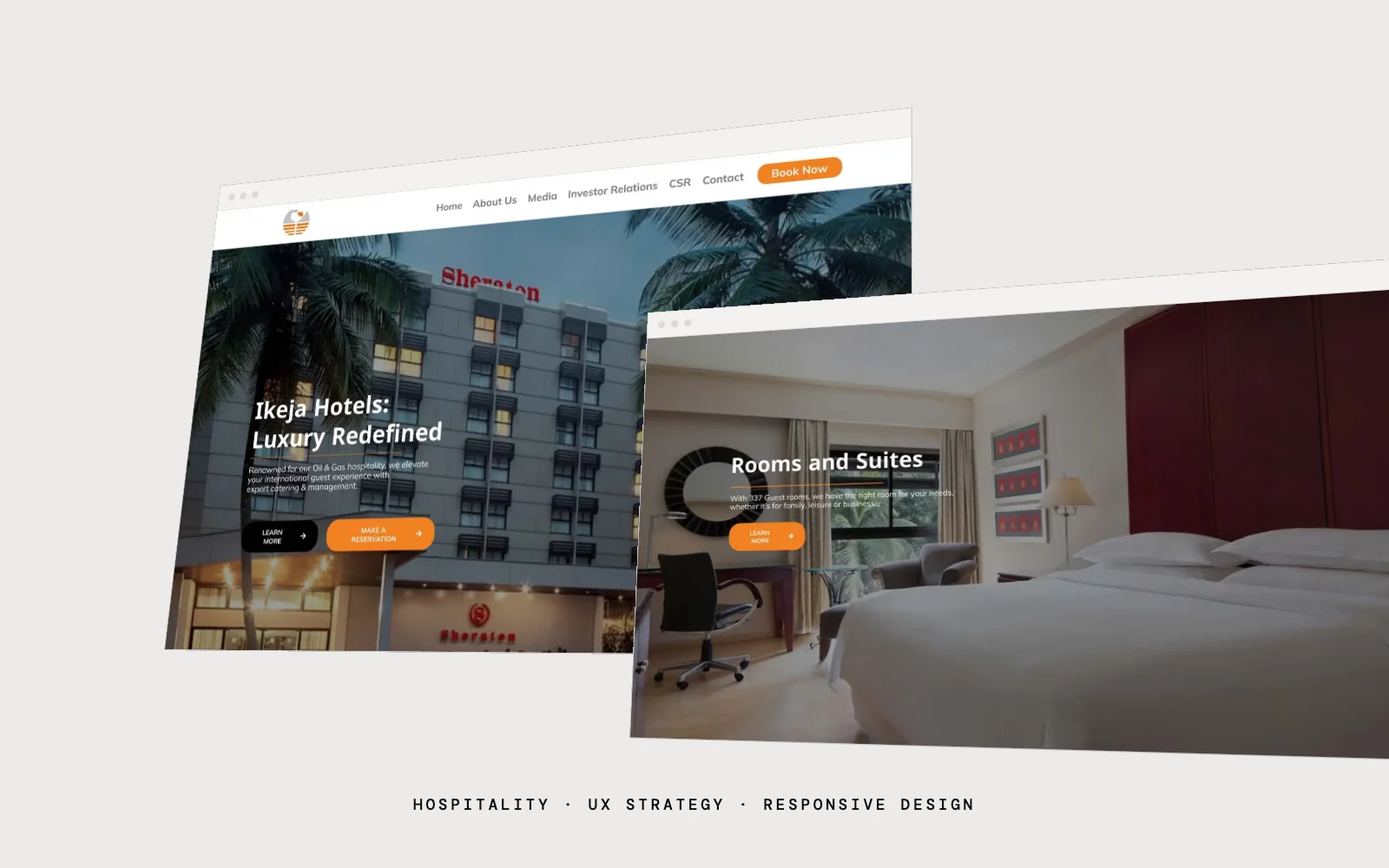
Ikeja Hotels started with interviews, user research and analytics, then one route from landing page to booking confirmation. Following the relaunch, Ikeja Hotels recorded a 45% increase in qualified inbound leads.
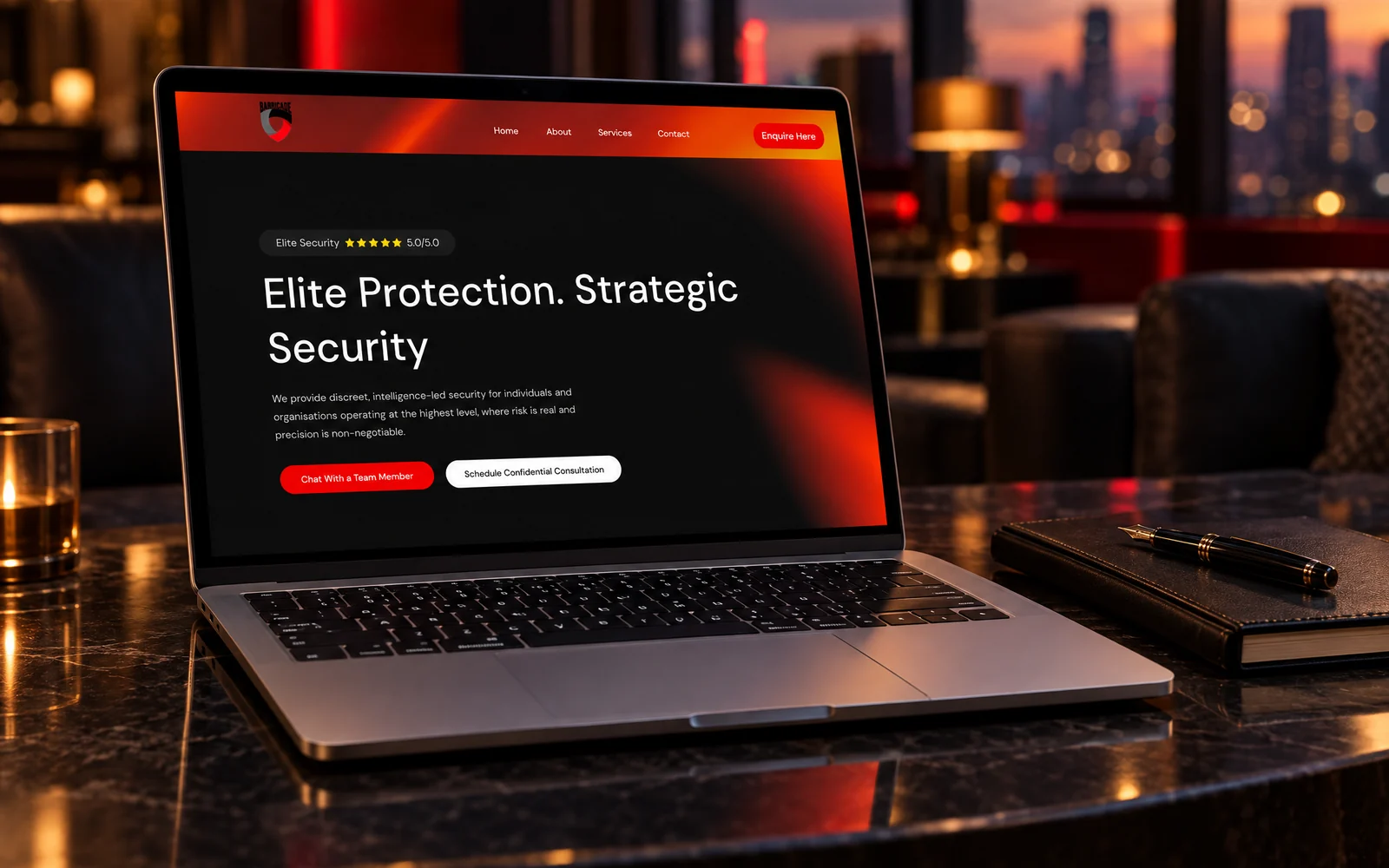
The Barricade, an executive protection firm, needed a site its cautious buyers would trust before the first call. We rebuilt the positioning, the user experience, the interface and the build around them. Following the relaunch, The Barricade recorded a 55% increase in leads and enquiries.
Neither result came from the new look alone. Both came from deciding first what the site had to do.
On cost, time and AI
Two-thirds of the projects in the survey cost under $10,000. That is a useful benchmark for a visual refresh. It is a different job from repositioning a company and rebuilding the journey around its buyers, which is why the report's own advice is to look past the headline quote and ask what the budget covers.
The timeline findings match what we see. Our website projects typically run three to eight weeks, and the hold-ups are rarely the build. They are approvals and content. Name one person who signs off, and start the copy early.
On AI, respondents use it most for research and discovery, and so do we: it helps us arrive at the first conversation already knowing the market. The judgement on position, and the final sign-off, stay with people.
If you are planning a redesign
The report closes with a planning checklist. Our short version:
- Write down what must improve. Qualified enquiries, conversion, or both, and how you will measure them after launch.
- Protect what already works. Find the pages that bring traffic and leads before anything moves, and map redirects if URLs change.
- Fix the scope. Agree the pages, templates, integrations and review rounds, and how new requests are approved.
- Give content and approvals owners and dates. They are part of the project, not the end of it.
Read the full report on GoodFirms: Website Redesign Statistics 2027. Our GoodFirms profile is here. For a second opinion on a redesign brief, book a Brand Clarity Call or start with the free Brand Growth Audit™.
The figures above are from GoodFirms' survey of 200+ professionals involved in website design and development, collected in October 2026 and published in November 2026. GoodFirms notes that they reflect respondents' experience and are not a statistically representative measure of every agency or project.

Über den Autor
Mit Mike Bruce arbeiten.
Mike Bruce ist Markenberater und Markenstratege in Abuja, Nigeria, und Gründer von Mike Bruce Design. Er hilft wachsenden Unternehmen in Nigeria, Großbritannien und den USA, klar zu wissen, für wen sie da sind, Preise nach dem geschaffenen Wert festzulegen und gewählt zu werden.
Aus der Arbeit
Die Idee, angewendet.
Weiterlesen